
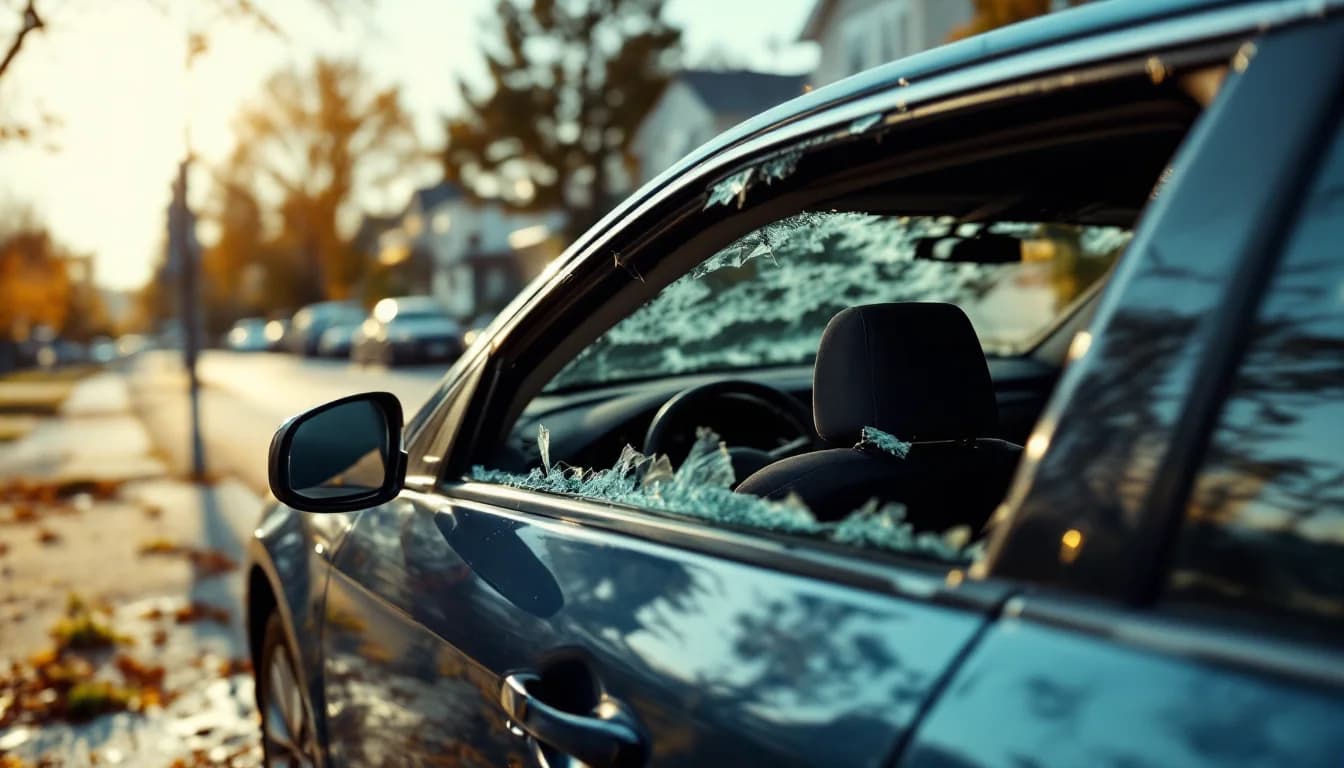
Hit and Run Accidents in Oregon: Your Legal Options

Oregon Medical Malpractice & Personal Injury Attorney
Few things are more frustrating and frightening than being struck by another driver who then flees the scene. Hit and run accidents leave victims injured, shaken, and facing the prospect of significant medical bills with no immediately identifiable responsible party. In Oregon, hit and run accidents occur with troubling frequency, and the victims of these crashes often assume they have no legal recourse because the other driver disappeared. That is not true. Oregon law provides multiple avenues for hit and run victims to pursue compensation and hold negligent drivers accountable.
Oregon's Legal Duty to Stop After an Accident
Oregon law imposes a clear legal obligation on every driver involved in an accident. When a collision results in injury or death to a person, a driver who knows or has reason to believe that the driver's vehicle was involved must immediately stop, remain at the scene, provide identification and insurance information, and render reasonable assistance to anyone who is injured. Failing to perform these duties is a serious criminal offense under ORS 811.705. ORS 811.705(3) classifies it as a Class C felony, or as a Class B felony if a person suffers serious physical injury (a term the statute ties to a definition in Oregon's criminal code) or dies as a result of the collision.1
When an accident involves only property damage and no injuries, the duty to stop still applies. Under ORS 811.700, a driver who knows or has reason to believe that the driver's vehicle was involved in a collision that damages property, and who does not perform the duties that section lists, commits a Class A misdemeanor. The section applies to a collision that occurs "on any highway or premises open to the public, or any premises adjacent to a highway or premises open to the public."2
These criminal statutes exist to protect victims and ensure that injured people receive the help they need. When a driver flees the scene, they violate a fundamental obligation---and they expose themselves to criminal prosecution in addition to civil liability.
Steps to Take Immediately After a Hit and Run
Even when the other driver has fled, several steps follow a hit and run, and some carry the short statutory deadlines described below:
- Reporting to police. A police report can record every detail the victim can recall about the fleeing vehicle---make, model, color, license plate (even a partial number), direction of travel, and any distinguishing features. A police report is essential documentation for both criminal and civil proceedings.
- Medical attention. Prompt medical treatment, whether at an emergency room or with a doctor, creates a documented connection between the accident and the injuries, which is vital to any insurance claim.
- Documenting the scene. Photographs of vehicle damage, the accident location, road conditions, traffic signs, any debris left by the other vehicle, and any skid marks or paint transfer preserve evidence of how the crash happened.
- Witnesses. The names and contact information of anyone who saw the accident can matter: witness statements can help police identify the fleeing driver and strengthen a claim.
- Reports and notice. ORS 811.720 and 811.725 require a driver to report a collision to the Oregon Department of Transportation within 72 hours when it results in injury or death to any person, or when a collision on a highway or premises open to the public, or on premises adjacent to either, results in damage to the property of any person in excess of $2,500, in the circumstances ORS 811.720(2) lists. ODOT may increase that dollar figure every five years based on the Consumer Price Index, and ORS 811.720(4) lists exemptions.3 For a hit and run UM claim, ORS 742.504(2)(b) also sets a 30-day deadline for a sworn statement to the insurer, described below.
- Legal counsel. A hit and run claim involves complexities that a standard car accident case does not. Compensation can come through the injured person's own insurance, a civil lawsuit, or both, and a car accident attorney can explain how those options fit together.
How Police Investigations Can Identify Hit and Run Drivers
Even when the other driver flees, law enforcement has tools to track them down. Police may use surveillance camera footage from nearby businesses and traffic cameras, partial license plate information run through DMV databases, paint transfer and debris analysis, witness descriptions, and forensic evidence left at the scene.
When the at-fault driver is identified, the injured person can pursue a claim directly against that driver and the driver's insurance company. The criminal case is separate from the civil claim for damages, and a criminal conviction is not required to recover compensation.
Recovering Compensation When the Driver Is Not Found
In many hit and run cases, the at-fault driver is never identified. When that happens, the injured person's own insurance becomes the primary source of recovery. Under ORS 742.502, every motor vehicle liability policy that insures against bodily injury liability must include uninsured motorist (UM) coverage if the policy is issued for delivery in Oregon, or is issued by an insurer doing business in Oregon for a vehicle principally used or garaged here. UM limits must be the same as the policy's bodily injury liability limits unless a named insured elects lower limits in writing, and those limits may not be lower than the bodily injury amounts required by ORS 806.070.4
For hit and run purposes, the definition of an "uninsured vehicle" in ORS 742.504(2)(k) includes a "hit-and-run vehicle" and a "phantom vehicle". Each definition comes with conditions.5
- A hit-and-run vehicle, under ORS 742.504(2)(b), is one that causes bodily injury to an insured through physical contact with the insured or with the vehicle the insured is occupying, provided that: (A) the identity of either the operator or the owner of the vehicle cannot be ascertained; (B) the insured or someone on behalf of the insured reported the accident within 72 hours to a police, peace or judicial officer, to the Department of Transportation or to the equivalent department in the state where the accident occurred, and filed with the insurer "within 30 days thereafter" a statement under oath that the insured or the insured's legal representative has a cause of action arising out of the accident against a person or persons whose identities are unascertainable, setting out the supporting facts; and (C) at the insurer's request, the insured or the insured's legal representative makes the vehicle the insured was occupying available for inspection.
- A phantom vehicle, under ORS 742.504(2)(g), is one that causes bodily injury to an insured in a motor vehicle accident without any physical contact with the insured or the vehicle the insured is occupying. It is subject to the same identity condition and the same 72-hour report and 30-day sworn statement condition. It also requires that "The facts of the accident can be corroborated by competent evidence other than the testimony of the insured or any person having an uninsured motorist claim resulting from the accident".
When a vehicle meets one of these definitions, UM coverage can apply, subject to the other terms of the coverage.
Uninsured motorist coverage can compensate the injured person for:
- Medical expenses
- Lost wages
- Pain and suffering
- Other damages the injured person would normally recover from the at-fault driver
The minimum UM coverage in Oregon matches the minimum liability limits: $25,000 per person and $50,000 per accident.
Personal Injury Protection (PIP) coverage also applies in hit and run cases. The PIP benefits required by ORS 742.524 include reasonable and necessary medical expenses incurred within two years after the injury, up to $15,000 in the aggregate, and, if the injured person usually works and the disability continues for at least 14 days, 70 percent of lost income from work, subject to a $3,000 monthly maximum and a 52-week aggregate period. Under ORS 742.520, the potential existence of a tort claim does not relieve the insurer of the duty to pay PIP benefits, and the insurer must pay them promptly after proof of loss has been submitted, so they can help cover expenses while a UM claim is being processed.6
Filing a UM Claim Against Your Own Insurer
A UM claim is a claim against the injured person's own insurance company. Policyholders often assume their own insurer will be on their side, but in a UM claim the insurer's financial interests diverge from the insured's. In a UM claim, an insurer may:
- Dispute the severity of the injuries or argue that they are unrelated to the hit and run
- Challenge the circumstances of the accident or question whether a hit and run actually occurred
- Offer a settlement below the value of the claim
Todd Huegli has spent over 17 years advocating for accident victims in Oregon, including in claims that policyholders make against their own insurers.
The Statute of Limitations for Hit and Run Claims
A personal injury lawsuit against an identified hit and run driver falls under ORS 12.110(1), which provides that an action "for any injury to the person or rights of another, not arising on contract, and not especially enumerated in this chapter, shall be commenced within two years …"7
A UM claim against the injured person's own insurer runs on a separate time rule, found in the UM coverage terms that ORS 742.504 sets out. ORS 742.504(12)(a) provides that "no cause of action shall accrue to the insured under this coverage unless within two years from the date of the accident" one of four things has happened: (A) agreement as to the amount due under the policy has been concluded; (B) the insured or the insurer has formally instituted arbitration proceedings; (C) the insured has filed an action against the insurer; or (D) suit for bodily injury has been filed against the uninsured motorist and, within two years from the date of settlement or final judgment against the uninsured motorist, the insured has formally instituted arbitration proceedings or filed an action against the insurer.8 If the applicable time limit is missed, the right to pursue compensation can be lost.
Because hit and run cases often involve delays---waiting for police to identify the driver, processing UM claims, and treating ongoing injuries---the two-year window can pass more quickly than victims expect. If the hit and run resulted in a fatality, the personal representative of the person who died may be able to bring a wrongful death claim for the benefit of the family members ORS 30.020(1) lists. That action must be commenced within three years after the injury causing the death is discovered or reasonably should have been discovered by the decedent, by the personal representative, or by a person for whose benefit the action may be brought who is not the wrongdoer, and in no case later than the earliest of three years after the death or the longest applicable statute of ultimate repose.9
You Have Options After a Hit and Run
Being the victim of a hit and run does not mean being without legal recourse. Between uninsured motorist coverage, PIP benefits, civil lawsuits against identified drivers, and the resources of law enforcement to track down those who flee, Oregon law provides meaningful pathways to recovery. Given the reporting and filing deadlines described above, timing and documentation carry particular weight in hit and run claims.
For people injured in an Oregon hit and run, and for families who lost someone in one, a personal injury attorney can review the available sources of compensation and the deadlines that apply to each.
Footnotes
-
ORS 811.705, Failure to perform duties of driver to injured persons; penalty. https://www.oregonlegislature.gov/bills_laws/ors/ors811.html ↩
-
ORS 811.700, Failure to perform duties of driver when property is damaged; penalty. https://www.oregonlegislature.gov/bills_laws/ors/ors811.html ↩
-
ORS 811.720, When collision must be reported to Department of Transportation; ORS 811.725, Driver failure to report collision to Department of Transportation; penalty. https://www.oregonlegislature.gov/bills_laws/ors/ors811.html ↩
-
ORS 742.502, Uninsured motorist coverage; underinsurance coverage. https://www.oregonlegislature.gov/bills_laws/ors/ors742.html ↩
-
ORS 742.504, Required provisions of uninsured motorist coverage. https://www.oregonlegislature.gov/bills_laws/ors/ors742.html ↩
-
ORS 742.520, Personal injury protection benefits for motor vehicle liability policies; applicability; ORS 742.524, Contents of personal injury protection benefits; deductibles. https://www.oregonlegislature.gov/bills_laws/ors/ors742.html ↩
-
ORS 12.110, Actions for certain injuries to person not arising on contract; action for overtime or premium pay; action for professional malpractice; effect of fraud or deceit; action for injuries to person arising from nuclear incident. https://www.oregonlegislature.gov/bills_laws/ors/ors012.html ↩
-
ORS 742.504, Required provisions of uninsured motorist coverage. https://www.oregonlegislature.gov/bills_laws/ors/ors742.html ↩
-
ORS 30.020, Action for wrongful death; when commenced; damages. https://www.oregonlegislature.gov/bills_laws/ors/ors030.html ↩

Todd Huegli is an Oregon medical malpractice, personal injury, and wrongful death attorney with 50+ complex cases tried to verdict. He is a SuperLawyers honoree and member of the Oregon Trial Lawyers Association President's Circle.
Related Articles

What Counts as a Hit-and-Run Vehicle Under Oregon UM Law
How ORS 742.504(2)(b) defines a hit-and-run vehicle for Oregon uninsured motorist coverage, and how that differs from the phantom vehicle rule in (2)(g).

Oregon UIM Coverage Doesn't Offset Liability Insurance
Oregon UIM coverage stacks on top of the at-fault driver's liability limits under ORS 742.504(7)(d) instead of being reduced by them — what that means today.
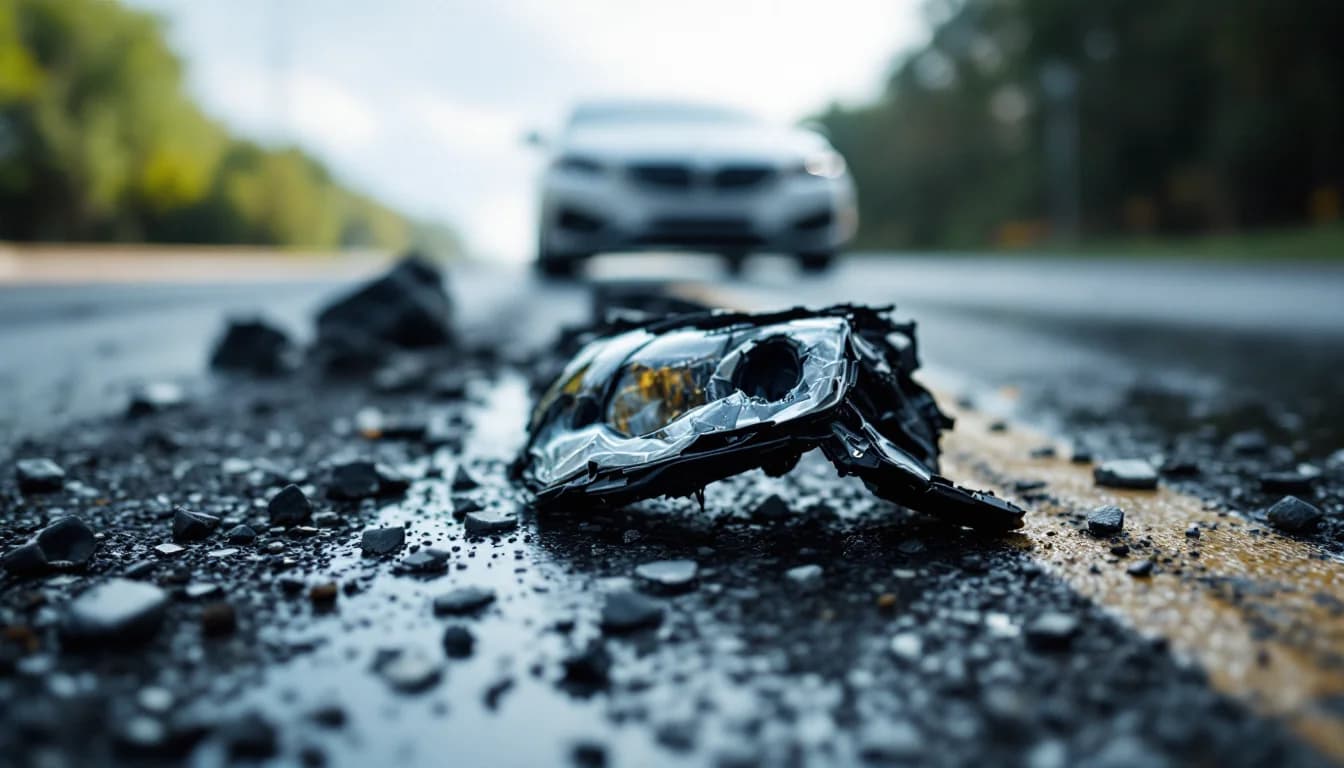
Uninsured and Underinsured Motorist Claims in Oregon
Understand Oregon UM/UIM coverage requirements, how to file a claim against your own insurer, stacking policies, arbitration, and why adequate coverage matters.
If you believe you or a loved one has been a victim of medical malpractice or negligence, contact Huegli Law for a free consultation.
Call 971-317-6436