
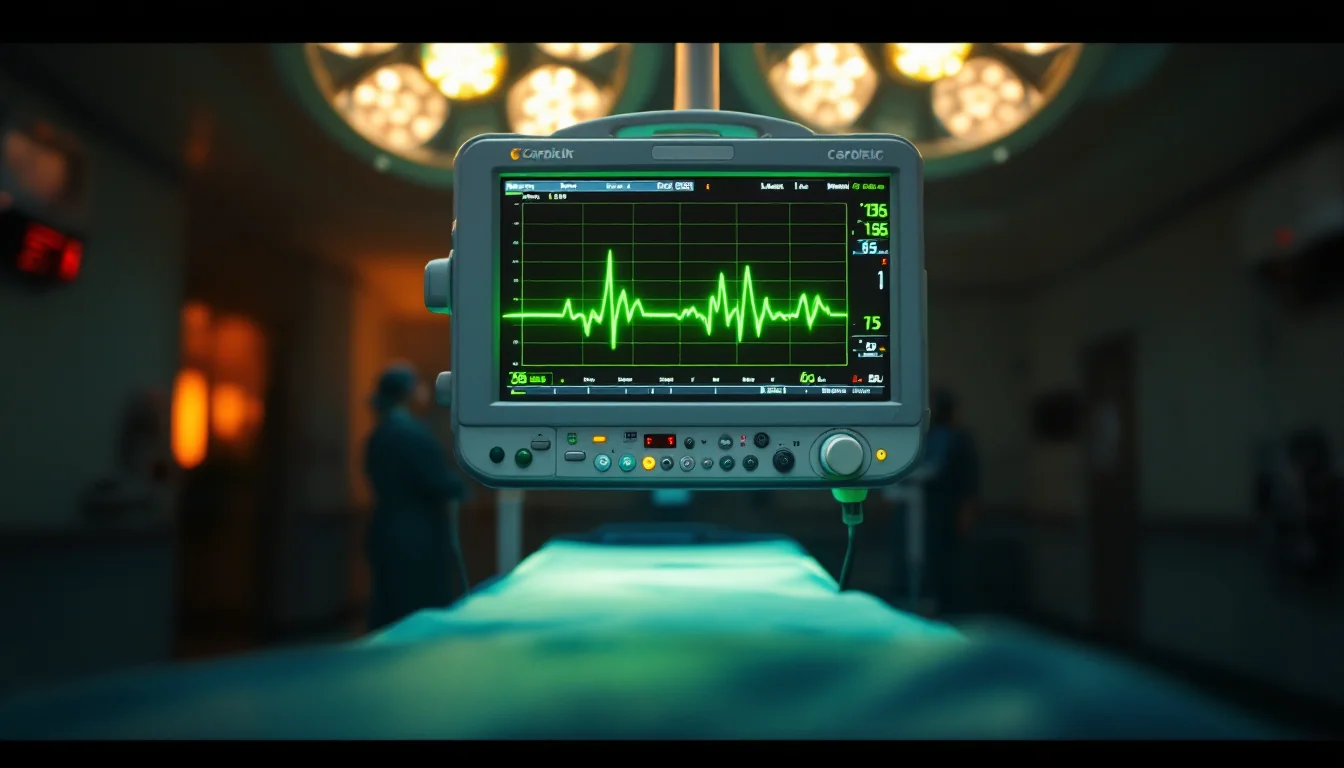
Anesthesia Errors in Oregon: Failure to Intubate & Hypoxia
Last reviewed by Todd Huegli on September 6, 2026

Oregon Medical Malpractice & Personal Injury Attorney
Anesthesia is one of the most carefully monitored phases of any surgery. When the system works, it is invisible — a patient is induced, maintained, and woken without ever knowing what happened. When something goes wrong, the consequences are unforgiving: a few minutes without oxygen can leave a healthy patient with permanent brain injury, and a few minutes more can be fatal.
This article describes the categories of anesthesia errors that most often support an Oregon medical malpractice claim, the legal standard, and the deadlines that govern.
What can go wrong during anesthesia
Anesthesia errors fall into a small number of recurring categories.
- Failure to intubate or ventilate. A patient who cannot be intubated and cannot be effectively ventilated by mask is in a "can't intubate, can't oxygenate" emergency — minutes count. Difficult-airway algorithms exist for exactly this scenario. A failure to recognize or follow the algorithm — to escalate to an alternative airway device, a fiberoptic technique, or a surgical airway — is a frequent pathway to hypoxic injury.
- Hypoxia and anoxia (oxygen deprivation). Inadequate ventilation, dislodged endotracheal tubes, ventilator misconfiguration, and missed circuit disconnects all cause hypoxia. A patient deprived of oxygen for more than a few minutes can develop hypoxic-ischemic encephalopathy — the same injury pattern seen in cardiac-arrest survivors.
- Anesthesia awareness. Inadequate depth of anesthesia leaves a patient conscious during surgery while paralyzed and unable to communicate. Bispectral-index (BIS) monitoring and end-tidal anesthetic-gas monitoring are part of the modern standard precisely to prevent this.
- Dosing errors. Wrong drug, wrong concentration, wrong rate, or interactions with the patient's medications and comorbidities. Pediatric and obese patients are particularly vulnerable to dosing miscalculations.
- Failure to monitor. Continuous monitoring of oxygenation, ventilation, circulation, and temperature is the foundation of safe anesthesia. Lapses in monitoring — gaps in the electronic record, missed alarms, providers leaving the room — are recurring fact patterns in anesthesia malpractice.
- Aspiration. Patients who have not appropriately fasted, or who have not been managed for known aspiration risk, can aspirate gastric contents into the airway during induction.
The standard of care for anesthesia providers
Under ORS 677.095, an Oregon physician — including an anesthesiologist — owes the patient "the degree of care, skill and diligence that is used by ordinarily careful physicians in the same or similar circumstances in the community."1 Certified registered nurse anesthetists (CRNAs) practice under the standard of their own profession, but their work is judged by similar competence-based criteria.
In an anesthesia malpractice case, the expert is typically a board-certified anesthesiologist or a CRNA in the relevant clinical setting. The expert reviews the anesthesia record (typically a minute-by-minute electronic record), the surgical record, the pre-operative assessment, the post-anesthesia care unit notes, and any rapid-response or code documentation. The opinion focuses on whether the choices made — induction agent, airway plan, dosing, monitoring, response to deterioration — fell within the bounds of what a reasonably competent provider would have done.
Oregon does not require a pre-suit certificate of merit, which means well-documented anesthesia malpractice claims can be filed and developed without forfeiting discovery to a paperwork hurdle.
Causation in anesthesia injury cases
The causal chain in an anesthesia case is often shorter and more direct than in other med-mal claims. If a patient enters surgery healthy and emerges with a hypoxic brain injury, the anesthesia record usually contains the answer: how long was oxygen saturation below threshold, what was the end-tidal CO2 doing, how were the alarms responded to, and at what point was the airway re-secured.
That documentation cuts both ways — it can also exonerate a provider when the records show appropriate response within the standard. The reason anesthesia cases require expert review is not that the legal framework is unusual; it is that the medicine is unusually time- and detail-dependent.
The two-year discovery rule and the five-year repose
ORS 12.110(4) requires a medical malpractice action to be commenced "within two years from the date when the injury is first discovered or in the exercise of reasonable care should have been discovered."2 The two-year clock starts when you knew or should have known the doctor was negligent — not when you found out you were hurt. Under Gaston v. Parsons, 318 Or 247 (1994), "injury" in ORS 12.110(4) means the harm, its cause, and the negligence together. In anesthesia injury cases discovery is often early, but not automatically immediate: a family may learn of the hypoxic event in the recovery room while having no reason to know the airway management fell below the standard. The clock runs from when they knew or should have known the provider was negligent, not from the day they learned something went wrong.
The same statute imposes a five-year statute of repose: every such action "shall be commenced within five years from the date of the treatment, omission or operation upon which the action is based."2 The fraud or concealment exception extends the period only "within two years from the date such fraud, deceit or misleading representation is discovered."2
Public hospitals and OTCA notice
Anesthesia care provided at OHSU, a county or district hospital, or another public-body provider falls under the Oregon Tort Claims Act. ORS 30.275 requires written notice "within 180 days after the alleged loss or injury" for most claims, and "within one year after the alleged loss or injury" for wrongful-death claims.3 The OTCA notice runs in parallel with the underlying limitations period and can be the harder deadline to meet.
What an anesthesia case looks like in practice
The work in an anesthesia malpractice case begins with the anesthesia record — the second-by-second timeline of vitals, gases, and interventions. That record sits next to the operative report, the pre-anesthetic evaluation, and the post-anesthetic care notes. A board-certified anesthesiologist reads the record and forms an opinion on whether the choices made were within the standard. From there, the case turns on causation (did the breach cause the injury) and damages (what is the lifetime cost of a hypoxic injury, and what is fair compensation for the loss of pre-injury life).
This article is educational
This article describes Oregon law in general terms. It is not legal advice and does not create an attorney-client relationship.
Time limits matter. Most Oregon personal-injury and auto-accident claims must be filed within two years of the injury or accident. Medical malpractice claims must be filed within two years of when you knew or reasonably should have known of the negligence, with an outer limit of five years from the act itself (with a fraud exception). Wrongful death claims must be filed within three years of the date of death. Claims against public bodies (cities, counties, state agencies, public hospitals) require a notice of claim within 180 days. Missing these deadlines typically ends a case.
If you think you may have a claim, call Huegli Law at 971-317-6436 for a free case review. Todd Huegli is licensed in Oregon and consults on cases in Oregon only.
Footnotes
-
ORS 677.095 — Duty of care of practitioner. https://oregon.public.law/statutes/ors_677.095 ↩
-
ORS 12.110 — Actions for certain injuries to person not arising on contract; medical malpractice; fraud or deceit. https://oregon.public.law/statutes/ors_12.110 ↩ ↩2 ↩3
-
ORS 30.275 — Notice of claim; contents; service; time of notice and action. https://oregon.public.law/statutes/ors_30.275 ↩

Todd Huegli is an Oregon medical malpractice, personal injury, and wrongful death attorney with 50+ complex cases tried to verdict. He is a SuperLawyers honoree and member of the Oregon Trial Lawyers Association President's Circle.
Related Articles

Multiple Organ Failure From Missed Sepsis in Oregon
Untreated sepsis can cause septic shock and multi-organ failure. See how a delayed diagnosis can become an Oregon malpractice or wrongful-death claim.

Medication Errors & Pharmacy Negligence in Oregon
Wrong drug, wrong dose, missed interactions: medication errors injure Oregon patients. Here is how Oregon law treats prescribing and dispensing errors.

Birth Injury in Oregon: Failure to Perform a Timely C-Section
Delayed C-section, missed fetal distress, and shoulder dystocia mismanagement can cause permanent birth injury. Here is how Oregon malpractice law applies.
If you believe you or a loved one has been a victim of medical malpractice or negligence, contact Huegli Law for a free consultation.
Call 971-317-6436